Qwen LiveTranslate adds speaker separation to interpretation
The September model update combines bilingual text, context and translated speech in a streaming workflow.
THE STORY IN THREE POINTS
- LiveTranslate was updated on September 18.
- New capabilities include speaker separation and synchronized bilingual output.
- The team reports average lagging falling to 2.3 seconds.
The announcement
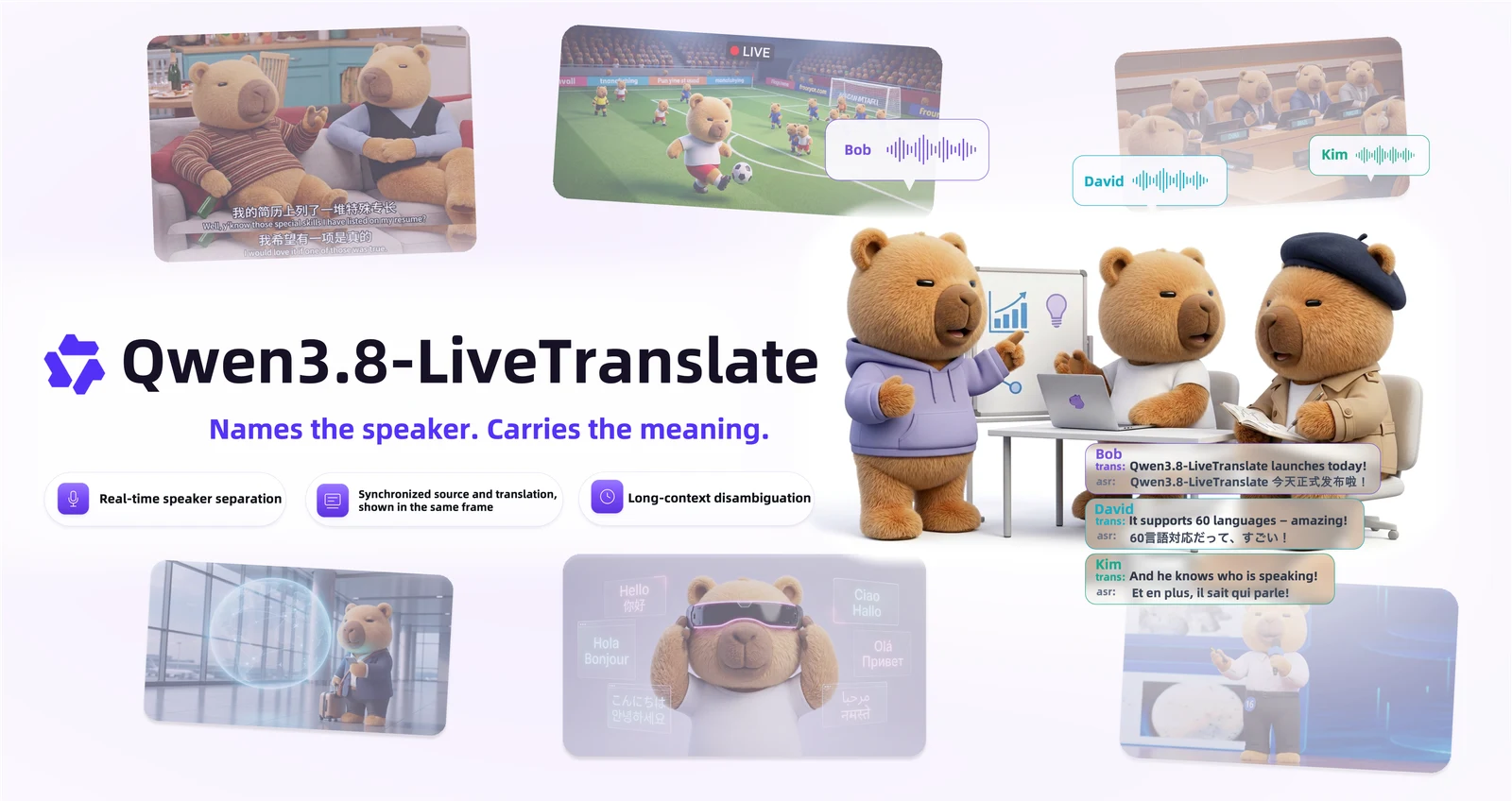
Qwen announced 3.8-LiveTranslate on September 18. The update combines real-time speaker separation, synchronized source and translated text, and context-based disambiguation. Its interleaved architecture links streaming understanding and speech generation. Qwen says average lagging decreased from 2.8 to 2.3 seconds and lists support for 60 input-audio or output-text languages. Those measurements and language capabilities are attributed to the official release, rather than our own interpretation tests.
Editorial context
In a group conversation, a translation can be linguistically correct yet difficult to follow if listeners cannot tell who said it. Speaker attribution and aligned source text could make a transcript easier to check later. The remaining question is whether the system preserves meaning when people overlap, correct themselves or use names introduced much earlier.
Editorial context: what to watch
A useful trial would include rapid turn-taking and repeated technical terms, with bilingual reviewers checking both meaning and attribution. Latency should be measured together with comprehension, because a quick translation that needs substantial correction may slow the conversation overall. Testing the specific language pair and audio conditions would provide stronger evidence than assuming equal quality across the coverage list.
Sources: Qwen: 3.8-LiveTranslate official announcement, September 18 ↗