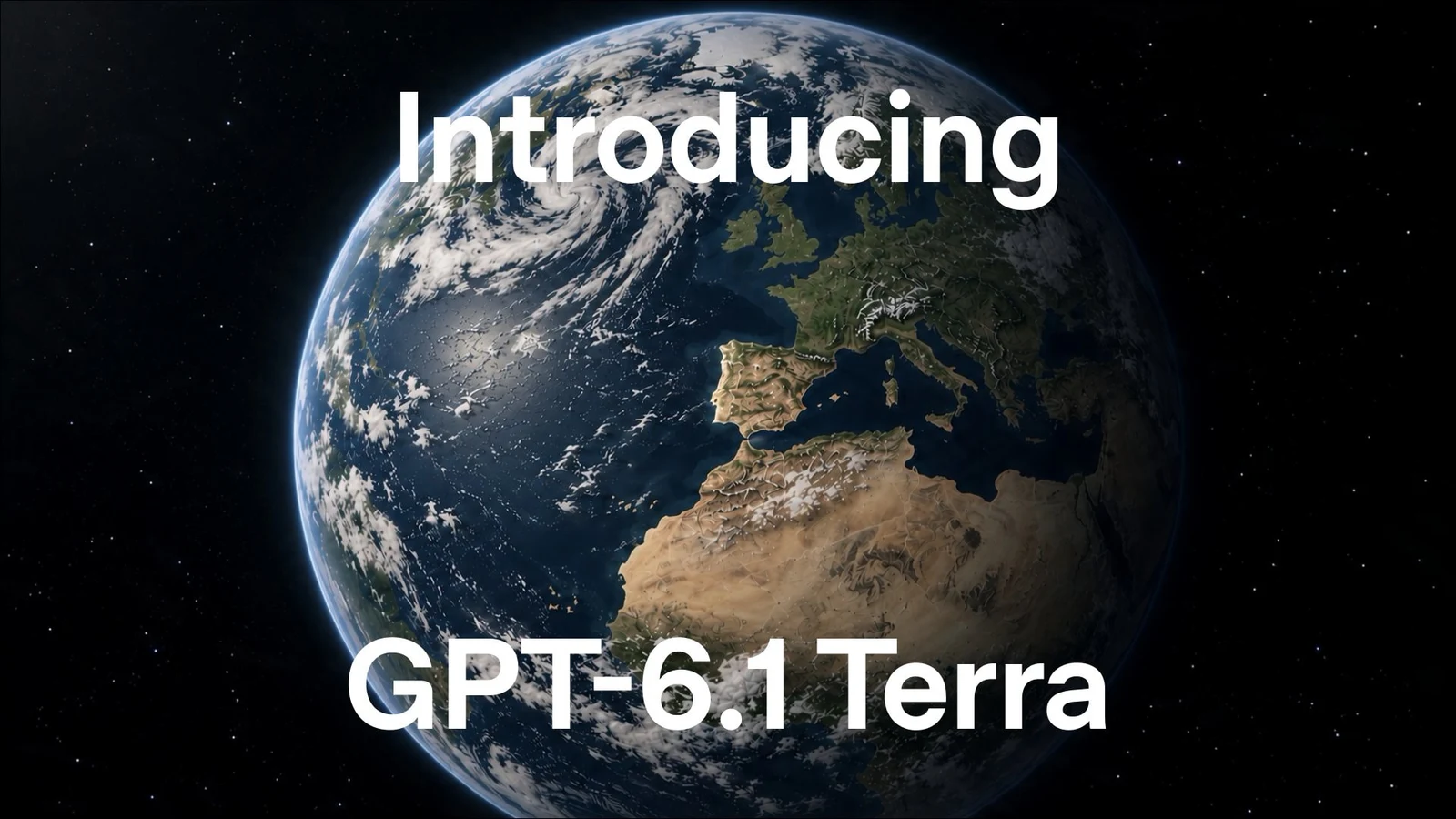
OpenAI launches GPT-6.1 Terra for faster, lower-cost visual reasoning and computer use
The model arrives in ChatGPT Work, Codex and the API, with standard token prices of $1 input and $5 output per million. Its desktop and coding gains come from OpenAI’s own evaluations.
THE STORY IN THREE POINTS
- GPT-6.1 Terra accepts text and images, supports a 1,050,000-token context window and returns text.
- Standard pricing is $1 input, $0.05 cached input and $5 output per million tokens; cache writes and long context have separate rates.
- The October 26 launch covers ChatGPT Work, Codex and the API; tool calling requires Responses.
An October 26 launch for everyday agent work
OpenAI released GPT-6.1 Terra on October 26, 2026. Its API changelog records the model as gpt-6.1-terra, available through Responses and Chat Completions. This report was published October 27 after checking the announcement, model documentation, pricing and system-card addendum.
At launch, Plus, Pro, Enterprise and Edu users can select the model in ChatGPT Work and Codex. Plan usage limits still apply.
Computer-use and coding gains, under OpenAI’s test conditions
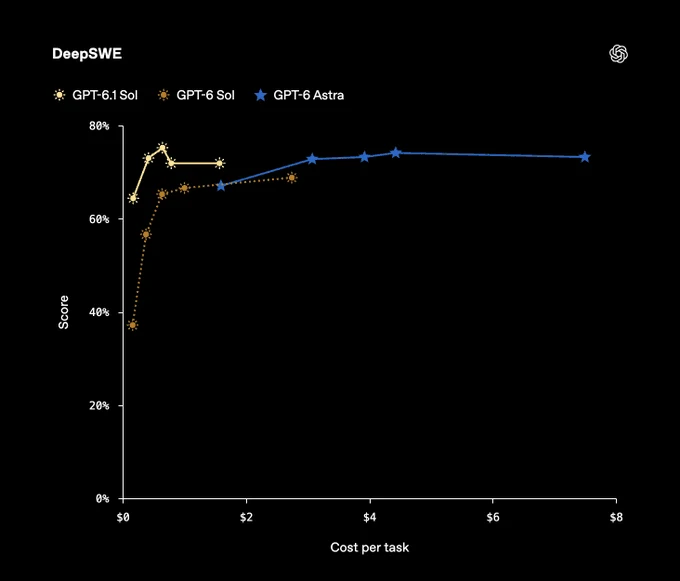
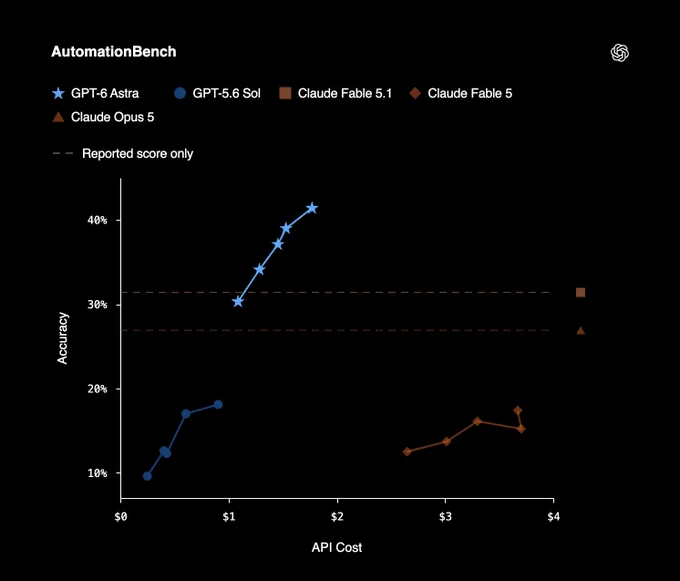
On Agents’ Last Exam v1, OpenAI reports a 15-percentage-point improvement over GPT-5.6 Terra at medium effort for about one-third the cost. It reports performance comparable to GPT-6 Astra at one-tenth its per-token price, and task completion over three times faster than Astra and GPT-6.1 Sol.
MMMU-Pro results exceed GPT-5.6 Terra at every tested effort. On the OSWorld 2.1 offline set, medium-effort Terra beats its predecessor’s best result. Terminal-Bench 4.0 reaches 50.3% at max effort, against GPT-5.6 Terra’s published 21.5%. These are vendor evaluations, not independently reproduced results.
Read the factuality comparison at matching effort levels
OpenAI’s internal difficult-prompt test reports low-effort factual errors falling from 53.6% to 16.7%. At max effort, the new model records 4.3%, roughly 18 percentage points below its predecessor at that setting. The latter is a separate comparison: it does not describe an 18-point drop from 16.7%. These rates concern that test, not all real-world answers.
Text and image input, with tools through Responses
The model page specifies a 1,050,000-token context window, up to 128,000 output tokens and a June 1, 2026 knowledge cutoff. It accepts text and images and outputs text; native audio and video input are unsupported. A demonstration involving video editing therefore should not be read as native video-input support.
The reasoning.effort options are none, low, medium, high, xhigh and max, with medium the default. Streaming and Structured Outputs are supported; fine-tuning is not. Tool calling requires Responses, whose supported tools include computer use, web and file search, code interpreter, hosted shell and MCP. Chat Completions availability alone does not establish equivalent tool support.
Lower token prices, with cache-write and context adjustments
For standard short-context requests, one million input tokens costs $1, cached input $0.05 and output $5. Cache writes cost $1.25 per million tokens for 30-minute retention or $2.50 for 12 hours. A cache-read discount is not a promise that writing the cache is free.
The model documentation specifies that prompts exceeding 272,000 input tokens apply double input and cache rates and 1.5 times the output rate to the full request. At standard rates, that means $2 input, $0.10 cache reads and $7.50 output per million, with cache writes adjusted too.
Batch and Flex are priced 50% below Standard; Fast mode is double Standard, and eligible regional processing adds 10%. The headline standard input/output prices are half GPT-6.1 Sol’s. Compare the same service tier and context band, and include tool use when estimating a complete workflow.
The system card describes both safeguards and evaluation limits
OpenAI’s October 26 addendum treats Terra as Critical in cybersecurity and High in biological and chemical capability under its Preparedness Framework. It applies the safeguard stack used for GPT-6.1 Sol and GPT-6 Astra, with compatible probes. These classifications describe the developer’s capability assessment, not a general safety certification.
The addendum reports resistance to prompt injection and evaluates staying within scope and disclosing blockers. It also notes that research or API evaluations can differ from production ChatGPT because prompts, tools and effort settings differ. Its results should be read with those conditions attached.
Editorial context: compare the cost of a completed workflow
Our reading is that Terra’s practical test is a recurring visual or desktop task: checking a document, entering a form or navigating an application. A model can save tokens while still generating extra retries or correction work. A useful comparison records successful completion, elapsed time and the full bill on the same tasks.
Separate image understanding from action reliability. Recognizing the correct field is one step; entering the correct value and confirming that it was saved are additional steps. For consequential workflows, include ambiguous screens, unexpected dialogs and cases that require human review.
For readers assessing the launch, the immediate question is which existing task becomes economical at the new rates. Start with a representative workload and compare effort settings before making a broader model switch. Benchmark percentages and token prices describe different parts of that decision.
Sources: OpenAI: Introducing GPT-6.1 Terra — launch, availability and vendor evaluations ↗ OpenAI model documentation: GPT-6.1 Terra specifications, tools and billing adjustments ↗ OpenAI API changelog: October 26 release and supported API endpoints ↗ OpenAI API pricing: standard, service-tier and prompt-cache rates ↗ OpenAI Deployment Safety Hub: GPT-6.1 Terra system-card addendum ↗